"Human impacts reshape ecological communities through the extinction and introduction of species. The combined impact of these factors depends on whether non-native species fill the functional roles of extinct species, thus buffering the loss of functional diversity. This question has been difficul...
"Biodiversity today has the unusual property that 85% of plant and animal species live on land rather than in the sea, and half of these live in tropical rainforests. An explosive boost to terrestrial diversity occurred from c. 100–50 million years ago, the Late Cretaceous and early Palaeogene. Dur...
"Biodiversity today is uneven, with equally ancient sister groups containing few or many species. It has often been assumed that high biodiversity indicates fast evolution, and yet in a classic work in 1944 George Simpson suggested that fast evolution might generate instability and extinction, and ...
"Among life history traits, offspring size has one of the most direct impacts on fitness, influencing growth, recruitment and survival of the individual, therefore affecting population, and ultimately macroevolutionary outcomes. Despite its ecological and evolutionary importance, little is known ab...
Dr Devapriya Chattopadhyay Associate Professor and Chair, Department of Earth and Climate Science, IISER Pune, India
is our third speaker.
Her talk is on "Paleontological research in India: the colonial past shapes the present and dictates the future"
The presentation is taking p...
We are continuing our Speaker Series with
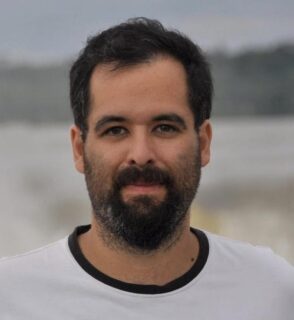
Dr Martin Nuñez, Grupo de Ecología de Invasiones, INIBIOMA, CONICET/ Universidad Nacional del Comahue, Argentina & Associate Professor, Department of Biology and Biochemistry, University of Houston, Texas.
His presentation is: "Making pa...
We are starting our Speakers Series!
The first talk will take place on Tue Nov 16th /11:00 UTC.
Dr Michael Rivera Bioarchaeologist and biological anthropologist, Faculty of Education, The University of Hong Kong
Title of the talk is "We all deserve to study the human past: t...
"Species are distributed unevenly across the surface of Earth. More species are found in the warm tropics than in cool temperate regions. This pattern was first recognized over two centuries ago by Alexander von Humboldt, with his observation “The nearer we approach the tropics, the greater the inc...
We are very happy that we can finally present you the lecture series in the context of the DDCP workshop.
A number of great colleagues will give interesting lectures. Afterwards, our PaleoSynthesis PostDoc Jansen will talk about his experiences with the BigQuestions project. Finally, there will ...
"The role of time (i.e. taxa ages) in phylogeny has been a source of intense debate within palaeontology for decades and has not yet been resolved fully. The fossilised birth-death range process is a model that explicitly accounts for information about species through time. It presents a fresh oppo...