We are opening the last call for workshop proposals in 2025! The deadline is December 15, 2025. Please visit the website with the necessary information before you start to prepare a proposal. For questions you may contact Danijela Dimitrijevic (science) or Barbara Seuß (logistics)
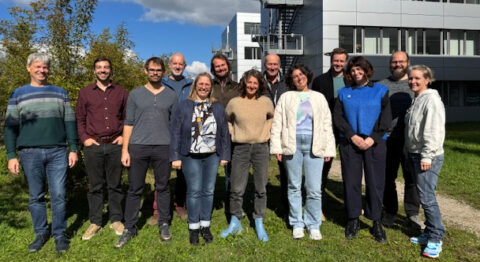
Last day of the DeepIL workshop. So far a time full of inspiration, ideas, and a great exchange between colleagues from different disciplines and with different backgrounds. Intense but inspiring!
After a short break following the summer school, the program continues. Next week, the DeepIL workshop will take place at the PaleoSynthesis Center. Participants will mainly be scientists based in Germany. However, DeepIL also receives support from external research institutions. The workshop is le...
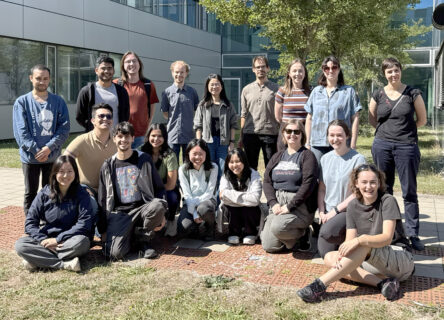
Group photo of this years Summer School students and some of the lecturers. All look still pretty fresh and motivated. It's halftime, lets see how it goes next!
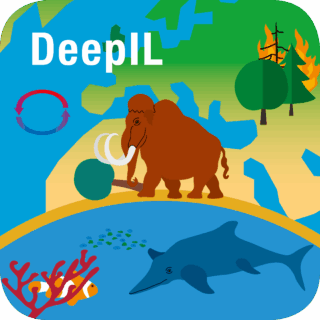
As for all the previous workshops we had an icon designed. DeepIL will be the upcoming workshop in fall and the topic is "Deep-Time Impacts of Life on the Earth System". And today we are happy to present the latest icon representing this workshop.
"The genus Nuskoisporites is a common component of Permian palynofloras, with biostratigraphic and paleogeographic importance. Despite the existence of previous revisions of its occurrence, there are still uncertainties concerning its complete stratigraphic range and paleogeographic distribution. T...
"Results: We found remarkably consistent patterns in which AET and MDE failed to offer a good explanation for species richness. WED was the best model when all islands were analyzed simultaneously; however, analyses on separate islands revealed that the precipitation term was not significant or neg...
Today is the kick-off of our summer school 2025. 12 smart and motivated students from all over the globe attend the course and hopefully take back home lots of knowledge and skills.
"At the end of the Cisuralian (early Permian), the Kungurian represents a key phase in plant evolution and in the development of associated pollen and spores. During the Artinskian, a noticeable shift began, with vegetation and palynofloras transitioning from those typical of humid conditions to th...
"Forests aren’t keeping up with today’s climate chaos. While temperatures soar within decades, tree populations take 100 to 200 years to shift in response. A sweeping new analysis of ancient pollen and modern data reveals this dramatic lag—and its consequences. As ecosystems fall out of sync with t...