
“…processes (induced by biological innovations) are commonly investigated within separate marine and terrestrial research traditions, limiting our ability to identify the principles that govern the long-term interactions between life and the Earth system“
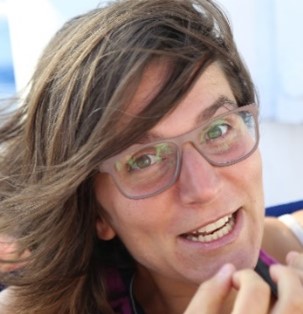
Valentina Bracchi (University of Milano-Bicocca, Italy)
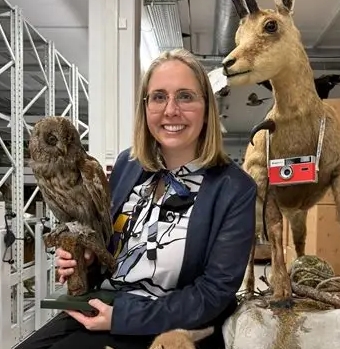
Evelyn Kustatscher (Tiroler Landesmuseen, Austria & LMU, Germany)
The PHOTON workshop will explore how habitat-forming photoautotrophs have acted as ecosystem and Earth-system engineers (ESE) through time. Across geological timescales, biological innovations have repeatedly altered resource flows, reshaped habitats, influenced carbon cycling, and generated ecological legacy effects that persisted far beyond the lifespan of individual organisms. Yet these processes are commonly investigated within separate marine and terrestrial research traditions, limiting our ability to identify the principles that govern the long-term interactions between life and the Earth system.
PHOTON addresses this challenge by focusing on two major groups of habitat-forming photoautotrophs: crustose coralline algae (CCA) in marine environments and terrestrial plants (TP) on land both being important ecosystem engineers and will bring together specialists in CCA and TP biology and paleontology, paleobotany, and proxy geochemistry to address three main questions:
(1) do marine and terrestrial photoautotrophs exhibit comparable ecological trajectories through time;
(2) under which conditions do habitat-forming photoautotrophs become Earth-system engineers; and
(3) do major environmental perturbations generate analogous responses across marine and terrestrial ecosystems?
1. Build an international, long-term network of researchers working on CCA systems and on fossil and recent TP
2. Identify common mechanisms through which habitat-forming photoautotrophs modify habitats, environmental stability, ecosystem structures, resource flows, diversity patterns, resource flows, and Earth-system processes across geological timescales.
3. Develop a shared terminology, metadata standards, and sampling strategies across marine (CCA) and terrestrial (TP) records
4. Develop a comparative perspective on taphonomy, preservation pathways, and environmental archives
5. Evaluate how major climatic, biogeochemical, and extinction-related perturbations affected marine and terrestrial habitat-forming photoautotrophs and identify common patterns of resilience, recovery, and ecosystem restructuring.
Daniela Basso (University of Milano-Bicocca, Italy), Juan Carlos Braga (University of Granada, Spain), Julio Aguirre (University of Granada, Spain), Ines Pyko (FAU Erlangen-Nürnberg, Germany), Sebastian Teichert (FAU Erlangen-Nürnberg, Germany), Steffen Trümper (Universität Münster, Germany), Sandy Hetherington (University of Edinburgh, UK), Barry Lomax (University of Nottingham, UK), Anne-Laure Decombeix (UMR AMAPlab, France), Mihai Tomescu (Humboldt State University, USA), Alexander Bowles (University of Oxford, UK)
scheduled for January 2027